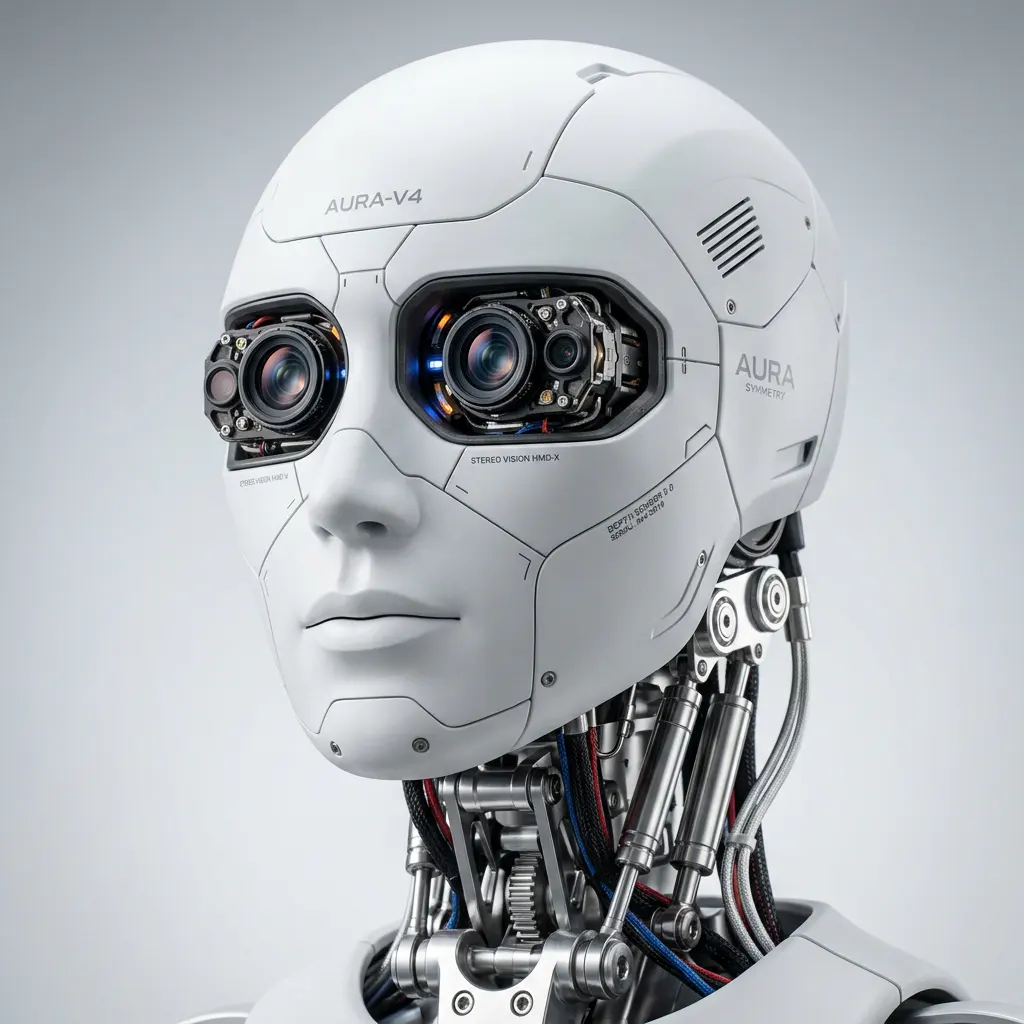
Perception
Head & Neck
A two-degree-of-freedom neck supporting stereo RGB-D vision, orientation sensing, microphones, audio output, and sensor interfacing.

Global Operations, PK
A battery-powered research platform concept bringing mechanical, electrical, control, sensing, and software systems together.
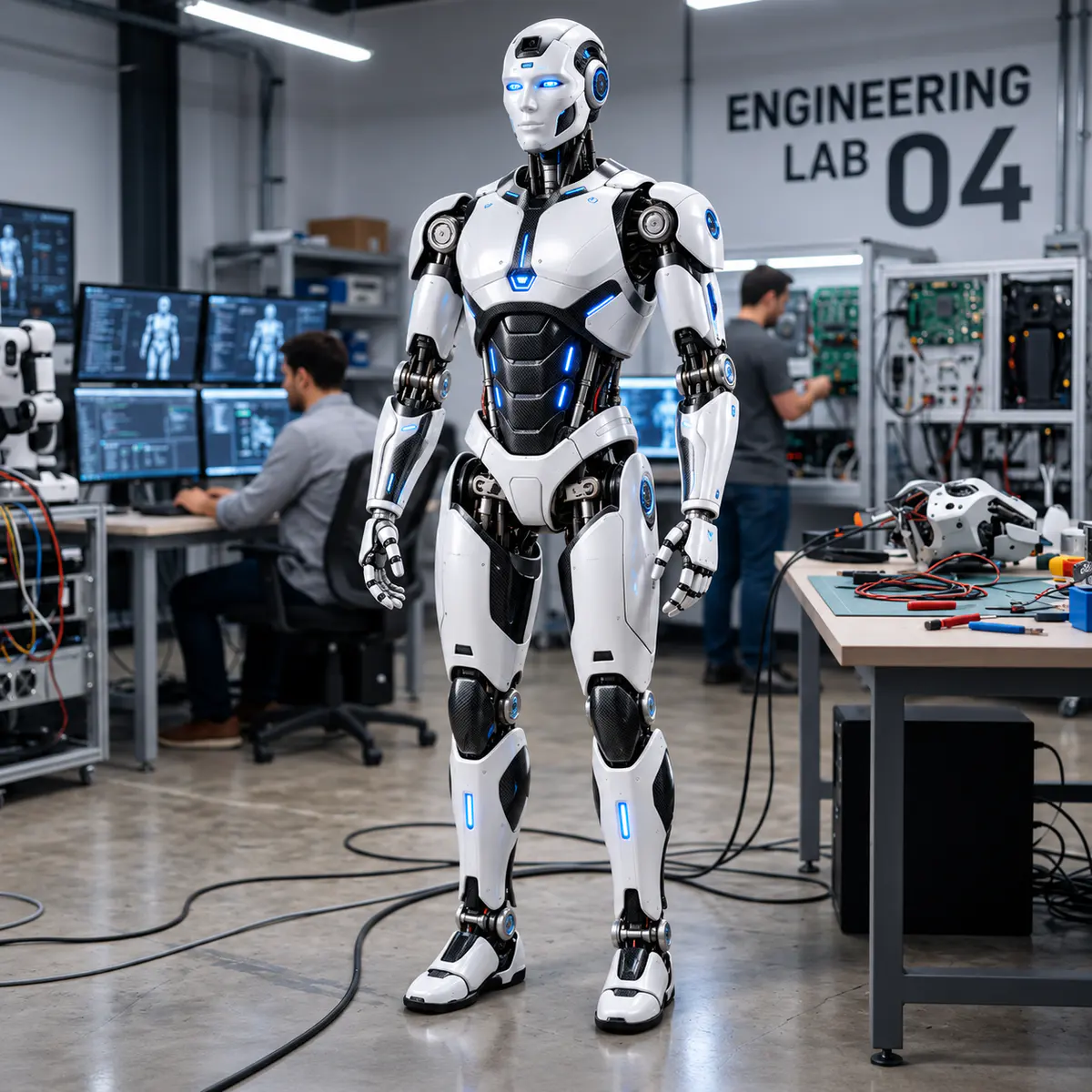
The stated objective is to build a robust, programmable, sensor-rich humanoid research platform by sourcing actuators, sensors, compute, and battery modules and integrating them locally.
The central engineering challenge is compatibility: mechanical fit, electrical architecture, control behavior, communications, software integration, and safety must work as one system.
The concept allocates 12 degrees of freedom to the legs, 14 to the arms, and four across the waist and neck. This creates a platform for locomotion, manipulation, perception, and human-robot interaction research.
Each subsystem combines structure, actuation, sensing, power, and communications requirements.
A two-degree-of-freedom neck supporting stereo RGB-D vision, orientation sensing, microphones, audio output, and sensor interfacing.
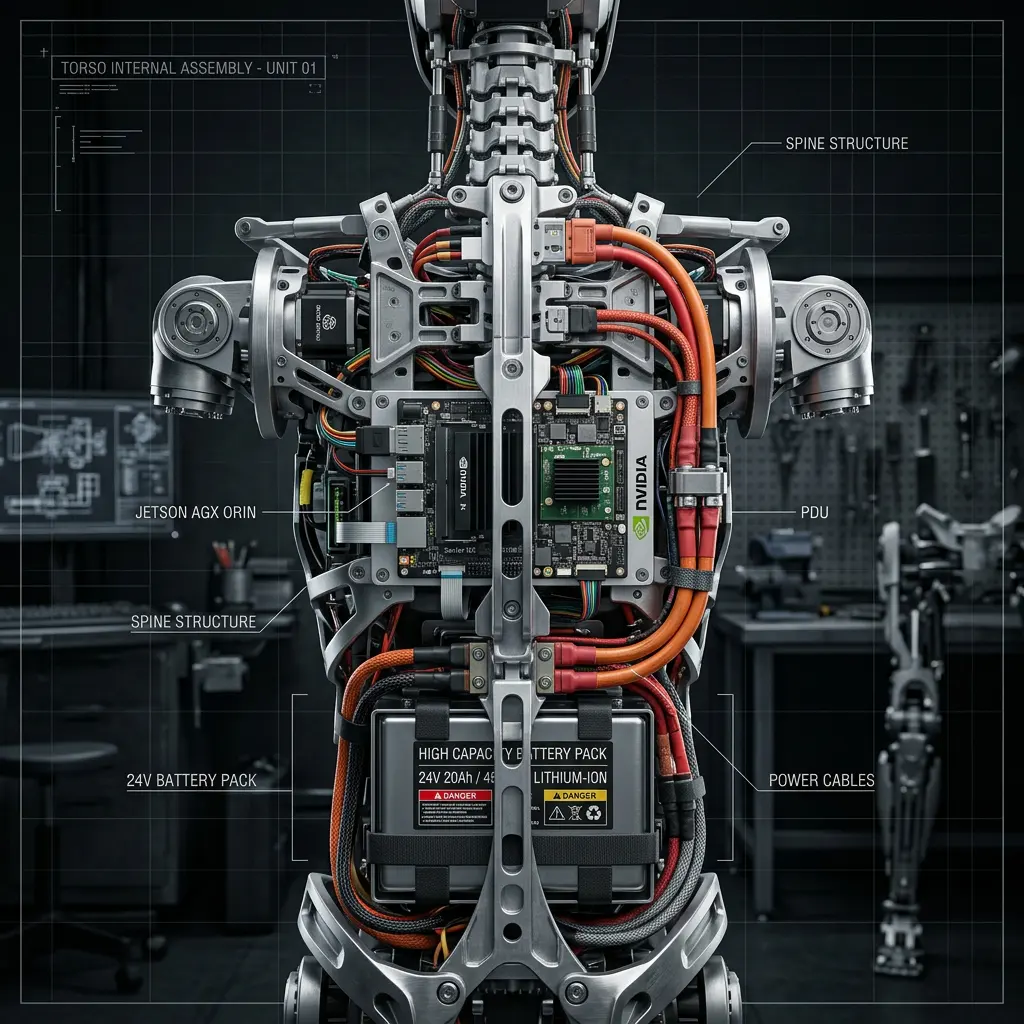
The structural core planned around a two-degree-of-freedom waist, NVIDIA Jetson compute, battery distribution, and a hardwired emergency stop.
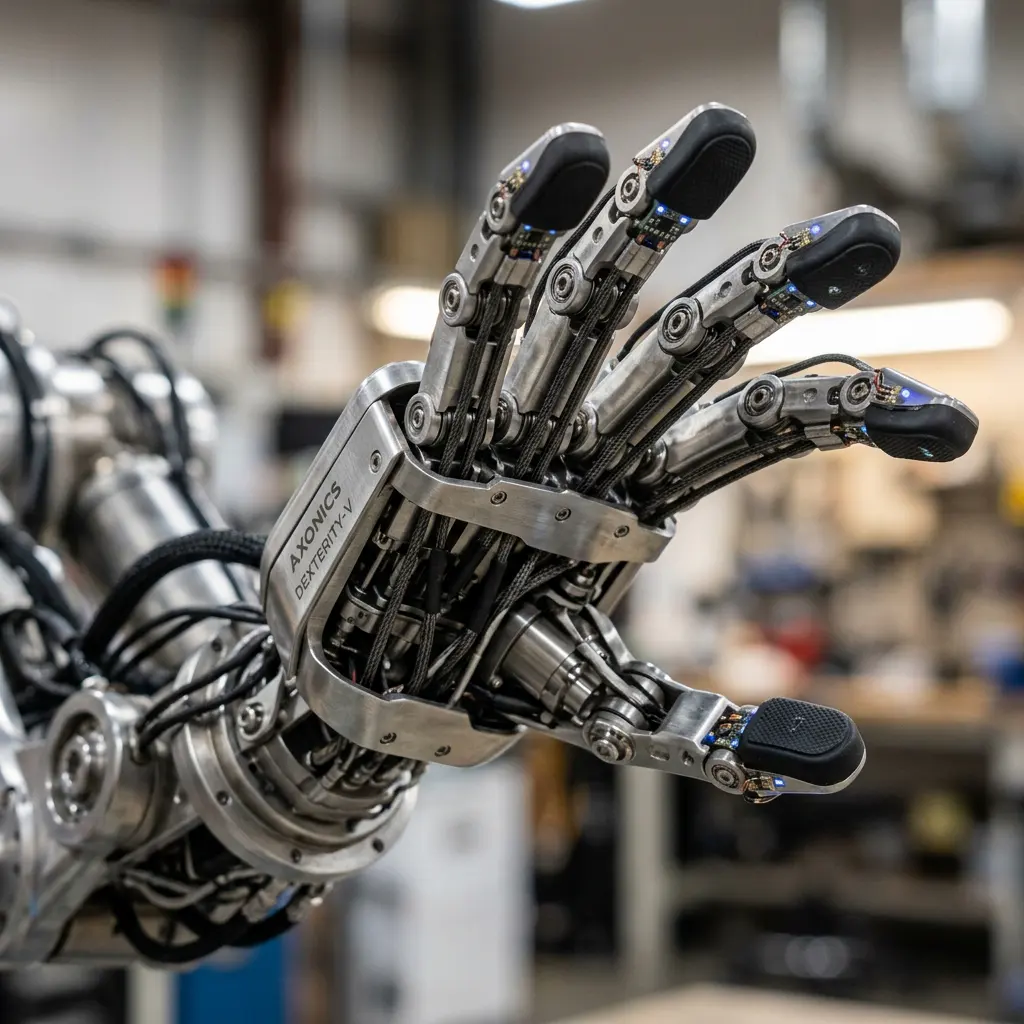
A manipulation subsystem based on compact actuation, tendon force transfer, tactile sensing, joint feedback, and a three-degree-of-freedom wrist.
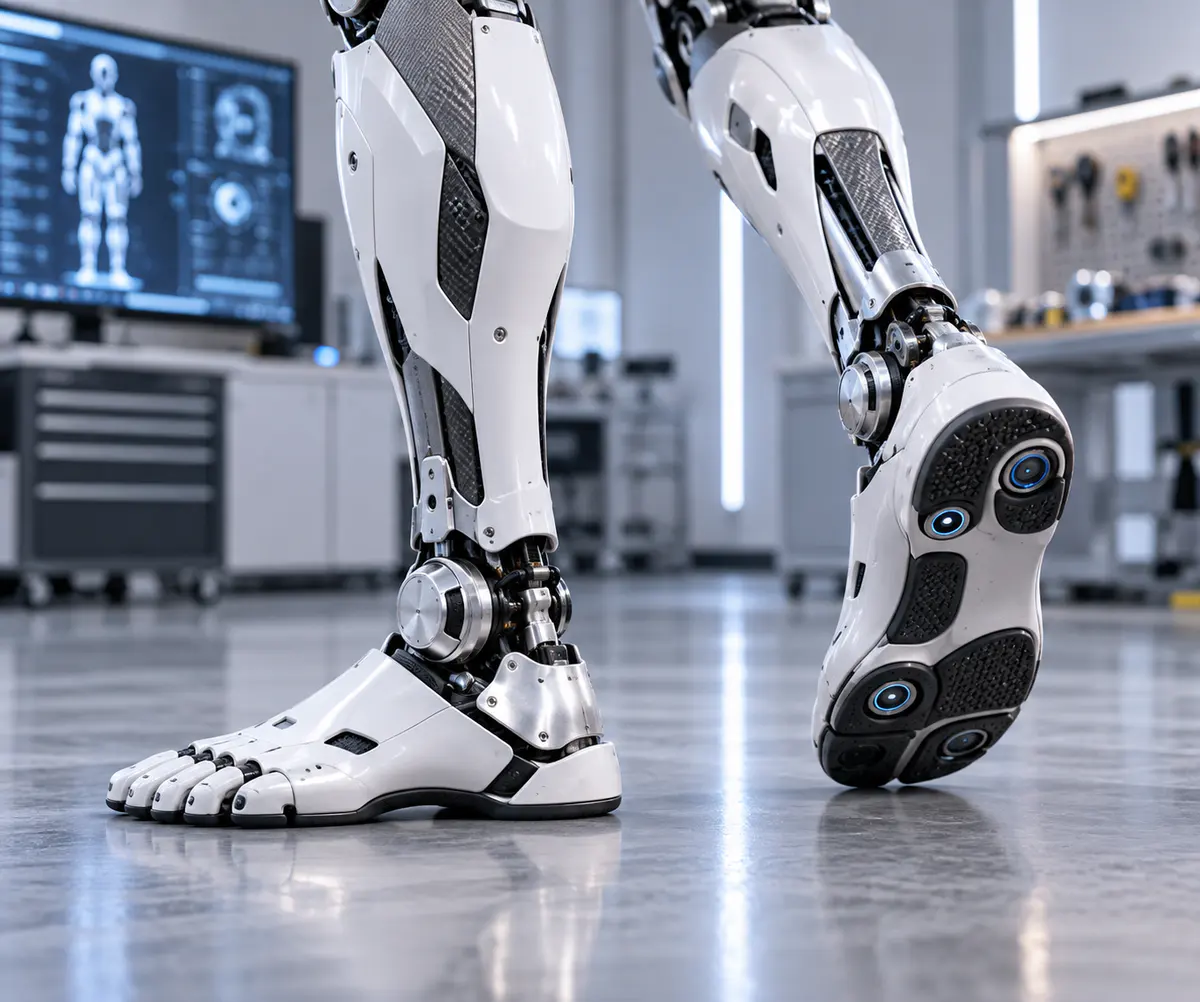
A six-degree-of-freedom chain for each leg, with high-torque joints, balance sensing, encoders, and impact-load considerations.
Integrated BLDC joint modules combining motors, gearboxes, encoders, drivers, and thermal sensing.
CAN, CAN-FD, EtherCAT, or RS-485 for joints, with Ethernet and USB 3 for cameras and LiDAR.
A ROS 2 workspace, real-time embedded drive, kinematics, balance control, and teleoperation.
A battery and BMS architecture with distribution controls and a hardwired emergency-stop path for actuator power.
Contact AFAQ to discuss research, integration, or collaboration requirements related to the platform.